Term Plan for Salaried
Buy Online
Term Plan for Non-Salaried
Buy Online
Term Insurance
Term Plan for Salaried
Buy Online
Term Plan for Non-Salaried
Buy Online
Term Insurance
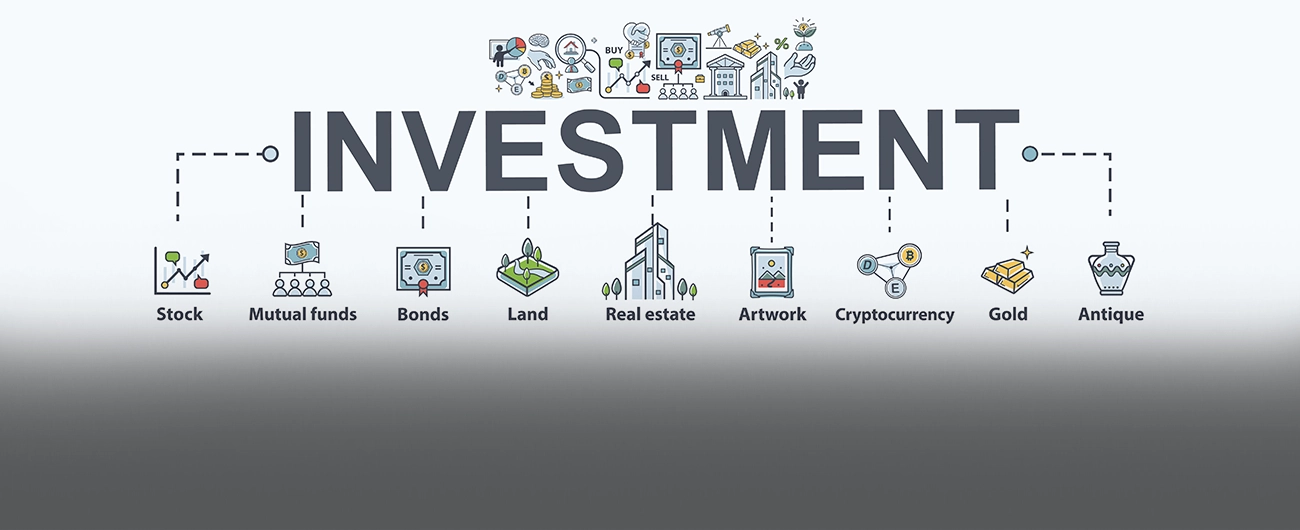
Nobody has ever achieved wealth by saving money. You can only become wealthy by putting your money to work. Money sitting idle in a bank account will go down in value with time. Inflation will reduce the value of your money every single year, and by the time you actually need that money, it will buy you a lot less than it does today. This is exactly why understanding investment types matters so much, whether you are a college student saving your first stipend or someone who just got their first job and is wondering what to do with the extra cash.
By submitting your details, you agree to PNB MetLife's Privacy Policy and authorize PNB MetLife and/or its authorized service providers to verify the above information and/or contact you to assist you with the policy purchase and/or servicing. You have the option to opt-out of this contact authorization by un-checking the box. The authorization provided by you herein will supersede all earlier authorizations/registrations made by you in this regard.
This guide is going to walk you through everything, from the basics of types of investment to how you can build your own investment plan.
Investing means putting your money into something today with the hope that it grows into more money later. That "something" could be gold, a business, property, stocks, or even a savings scheme offered by a bank or insurance company.
Think of it like planting a seed. You don't eat the seed today. You plant it, water it, wait, and eventually you get a tree that gives you fruit every season. Investment works on the same logic, just with money instead of seeds.
Now here's where a lot of beginners get confused. There isn't just one way to invest. There are dozens of options, and each one behaves differently depending on how much risk you're comfortable with, how long you can wait, and what your actual goal is.
Before jumping into where to invest money, you need to understand the categories first. Broadly, investments can be split into a few buckets.
Here's a quick comparison to make things clearer:
| Investment Type | Risk Level | Liquidity | Ideal For |
|---|---|---|---|
| Equity/Stocks | High | High | Long-term wealth creation |
| Fixed Deposits | Low | Medium | Safety-focused investors |
| Real Estate | Medium-High | Low | Long-term, large capital holders |
| Gold | Low-Medium | High | Portfolio diversification |
| ULIP | Medium | Medium (lock-in period applies) | Insurance + investment combo |
| Mutual Funds | Medium-High | High | Regular investors, all risk profiles |
Okay so now you know the types. But where to invest money actually depends on you, not on what your friend or cousin is doing. Three questions matter here.
If seeing your money go down by 10% in a month gives you sleepless nights, equity heavy investments probably aren't for you, at least not fully.
Money you'll need in 6 months should never go into stocks or anything volatile. Short-term goals need safer, more liquid options.
Buying a house in 10 years is different from saving for your child's education in 15 years, which is again different from planning your retirement. Each goal needs a different strategy.
A good rule that many financial planners suggest, though it's not set in stone, goes something like this: subtract your age from 100, and that's roughly the percentage you could consider putting into higher-growth options like equity, with the rest going into safer instruments. A 25 year old might lean more into growth, while a 55 year old would want more stability.
Having random investments scattered here and there isn't the same as having an actual investment plan. A plan gives your money direction and purpose.
Here's a simple framework anyone can follow.
Something worth noting, and this genuinely surprises a lot of new investors, is that starting small but starting early beats waiting to invest a big amount later. Compounding rewards time more than it rewards the amount.
Talking about investment plans in india specifically, the choices here are honestly pretty rich, and it's grown a lot over the last decade.
One thing that stands out about India's investment landscape is how insurance-based products have evolved. Earlier, a life insurance plan was seen purely as protection. Now, many plans are designed to also build a corpus for retirement, children's education, or wealth creation, without you having to buy separate products for each need.
A few things worth avoiding, learned mostly the hard way by people who've been investing for years.
That last one is probably the most damaging habit of them all. Waiting costs more than most people realize.
There's no single "best" investment type out there. What matters more is finding instruments that actually fit your goals, how much risk you're comfortable taking on, and your timeline. Sometimes that means leaning into equity for long-term growth. Other times it's debt for stability, gold to balance things out, or an insurance-backed plan that offers protection alongside growth. In the end, the plan you actually stick with tends to matter more than the one that looks perfect on paper.
For those wanting to pair life protection with structured, goal-based investing, PNB MetLife has a range of options worth looking into. Their plans, ULIPs included alongside other life insurance offerings, are designed to grow your wealth while your family stays financially protected. Take a look at the investment plans PNB MetLife offers and consider it a starting point toward a more secure financial future.
There isn't a fixed minimum you need to meet. Plenty of SIPs and insurance plans allow you to begin with just a few hundred rupees, sometimes a couple thousand, each month.
They're built for different things. A ULIP bundles life cover together with investment, while mutual funds exist purely to build wealth. Before deciding which one suits you, it helps to understand what ULIP plans actually bring to the table.
Look at your goal's timeline alongside how much risk feels comfortable for you, then pick the instrument that matches. Short-term goals do better with safer choices. Long-term goals can afford more exposure to market swings.
You can, and it's often the smarter move. Spreading your money across different asset types brings the overall risk down.
For simple, basic investments, not really. But once you're dealing with more complex products, ULIPs or retirement planning for example, getting professional input tends to make a real difference.
Related Articles:
Objectives of Investment: Short-Term Vs. Long-Term Investment Objectives
Top 10 Investment Tips for Beginners - Smart Money Strategies
Investment Portfolio Guide: How to make Investment Portfolio
Investing for Beginners: Investment Tips for Beginners
Best Investment Plans in India for High Returns

Piyush Kataria, SEO Manager at PNB MetLife, is a seasoned digital marketing strategist with over a decade of experience in optimizing websites for search engines. His expertise extends to keyword research, content strategy, technical SEO, and link building, all of which have been instrumental in driving organic traffic growth at PNB MetLife. With a strong foundation in life insurance, Piyush leverages his industry knowledge to create targeted and effective SEO campaigns.


Sakshi Malhotra is a seasoned marketing professional associated with the Life Insurance industry since 2007. At PNB MetLife, she heads Digital Marketing and Direct to Customer line of business. She is responsible for driving effective customer engagement through the company’s website and social media channels. In addition, she drives customer online buying journeys to help them buy the right product.
Disclaimer:
The aforesaid article presents the view of an independent writer who is an expert on financial and insurance matters. PNB MetLife India Insurance Co. Ltd. doesn’t influence or support views of the writer of the article in any way. The article is informative in nature and PNB MetLife and/ or the writer of the article shall not be responsible for any direct/ indirect loss or liability or medical complications incurred by the reader for taking any decisions based on the contents and information given in article. Please consult your financial advisor/ insurance advisor/ health advisor before making any decision.
PNB MetLife India Insurance Company Limited
Registered office address: Unit No. 701, 702 & 703, 7th Floor, West Wing, Raheja Towers, 26/27 M G Road, Bangalore -560001, Karnataka
IRDAI Registration number 117 | CIN U66010KA2001PLC028883
For more details on risk factors, please read the sales brochure and the terms and conditions of the policy, carefully before concluding the sale.
Tax benefits are as per Income Tax Laws in force & are subject to amendments made thereto from time to time. Please consult your tax consultant for more details.
Goods and Services Tax (GST) if applicable, levied at prevailing rate subject to change from time to time.
The marks "PNB" and "MetLife" are registered trademarks of Punjab National Bank and Metropolitan Life Insurance Company, respectively. PNB MetLife India Insurance Company Limited is a licensed user of these marks.
Call us Toll-free at 1-800-425-6969, Website: www.pnbmetlife.com, Email: indiaservice@pnbmetlife.co.in or Write to us: 1st Floor, Techniplex -1, Techniplex Complex, Off Veer Savarkar Flyover, Goregaon (West), Mumbai – 400062, Maharashtra.
| Beware of Spurious Phone Calls and Fictitious / Fraudulent Offers! IRDAI or its officials is not involved in activities like selling insurance policies, announcing bonus or investments of premium. Public receiving such phone calls are requested to lodge a police complaint. |
 Get Trusted Advice
Ask khUshi

Hi! I’m khUshi. How can I help you?